The Invisible Thresholds of Plastic Bag Printing and Processing
The production of a plastic bag mainly involves three steps: film blowing, printing, and bag making. In the circulation of modern goods, plastic packaging is no longer merely for completing product packaging and bundling; it is increasingly becoming an important way to display a brand. Printing is a very important step in plastic processing. Due to differences in the materials of various types of plastic packaging, printing techniques and methods vary. The problems most commonly encountered by many buyers in packaging customization are ink fading, color deviation, and blurred images. This article will explain issues related to plastic printing, hoping to help you solve the problems you encounter in customizing plastic packaging.
I. Mainstream Printing Methods in the Market
At present, plastic bag printing and processing in the market is mainly divided into two processes: flexographic printing and gravure printing. The two differ significantly in cost, color effect, production batch size, and environmental attributes, and are suitable for different customization needs and application scenarios. Because the quantities ordered by customers vary greatly, buyers can choose a more suitable printing method according to the purchase quantity.

-
Flexographic Printing (Flexo): An Environmentally Friendly Preferred Choice for Small and Medium Batches
Flexo printing is currently the mainstream process for customizing small and medium batches of plastic bags. It uses resin photosensitive printing plates and water-based environmentally friendly inks, meets domestic and overseas environmental testing standards, and is also the designated printing process for food-grade plastic bags. Its core advantages lie in low plate-making costs, short proofing cycles, convenient pattern modification, and low production loss.
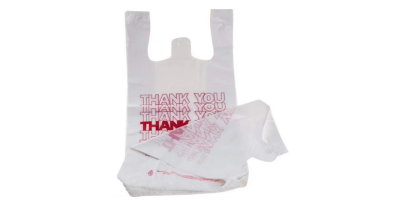
This process is suitable for printing 1-6 colors of simple text, logos, and basic patterns, and is widely used in supermarket vest bags, ordinary packaging bags, and simple product packaging bags. Its only shortcoming is that color saturation is average, and it cannot accurately present complex gradients, high-definition portraits, fine textures, and other images. The cost-effectiveness of large-batch production is relatively low.
-
Gravure Printing (Gravure): High-End, Exquisite Printing for Large Batches
Gravure printing is a high-end printing process. It uses metal engraved rollers for plate making. The image and text areas are engraved into the recessed parts of the rollers, and printing is completed through ink immersion, doctor blade scraping, and pressure transfer. This process has rich and full colors, extremely high color registration precision, and strong picture layering. It can perfectly reproduce gradient colors, high-definition patterns, and complex artistic textures, and its printing texture far exceeds flexo printing.
Gravure printing has fast production speed and high finished product stability, making it suitable for large-batch foreign trade packaging and high-end custom plastic bags for brands. However, its disadvantages are higher plate-making costs and longer cycles, and the cost of small-batch customization is relatively high. At present, the industry has fully upgraded to water-based gravure inks, solving the environmental problems of traditional solvent inks and adapting to various overseas environmental standards for export.

II. A Complete Process of Plastic Printing
Plastic packaging printing occurs after film blowing and before bag forming, belonging to the intermediate process of plastic packaging.
Step 1: Raw Material Re-inspection. Conduct a comprehensive inspection of formed film rolls, checking for holes, wrinkles, uneven thickness, and other problems. At the same time, retest the corona dyne value to confirm that the substrate meets printing standards.
Step 2: Plate Making, Color Mixing, and Proofing. Make plates according to the vector files provided by the customer. Staff accurately mix inks according to the color card, conduct multiple machine proofing runs, and after confirming that colors, patterns, and text are correct, lock the standard proof as the basis for mass production.
Step 3: Machine Color Registration Printing. The film runs at a constant speed and passes through multi-color units for color-by-color registration printing. After each color is printed, it enters the drying channel to thoroughly dry the ink, preventing ink sticking, plate pasting, and color bleeding after winding.
Step 4: Finished Product Inspection and Winding. After printing is completed, manual inspection combined with equipment sampling is used to check for registration misalignment, missing printing, ink flying, scratches, and other defects. Test the ink's abrasion resistance and adhesion. Qualified film rolls are wound for later use and transferred to the bag-making process.
III. Common Pitfall Avoidance Points in the Process of Custom Plastic Printing
First, in the process of custom plastic bag printing, printing files need to be in AI or PDF vector formats, with text converted to outlines and using CMYK color mode, to avoid blurred patterns and excessive color differences between screen and physical object caused by low-pixel bitmaps. Second, match substrates and inks according to needs. Ordinary PE film, degradable film, and thickened hard film require corresponding special inks. Mixing inks can easily cause ink loss and fading. Finally, do not use screen color as the sole standard, because the base color and light transmittance of the film will affect color presentation. The physical proofing effect must be taken as the final standard.
IV. Conclusion
Plastic bag printing is a comprehensive technology that integrates material properties, ink technology, equipment processes, and quality control management. For brand merchants and foreign trade enterprises, high-quality plastic bag printing can not only improve packaging texture, but also achieve long-term brand exposure through daily use scenarios, becoming a low-cost, high-value carrier for brand promotion.
Decoding the Plastic Blown Film Process
Related Article