"Compostable" Is a Conditional Promise
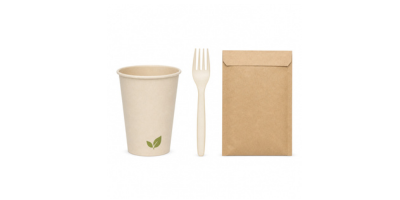
A paper cup printed with a green leaf, a fork made from cornstarch, a courier bag that says "degrades in nature." Most people who pick up these things share one assumption: it will disappear on its own. Often, it won't. It's not that the label is lying—"compostable" was never a property of a material. It is an outcome that happens only under specific conditions, in specific facilities, within a specific time window. Once it leaves those conditions, the promise quietly lapses.
-
"Compostable" Is a Test Result, Not a Material
Europe's reference standard is EN 13432; the U.S. uses ASTM D6400. The two are similar in approach, and a certificate under one system is usually recognized under the other. To carry this claim, packaging materials generally must pass four gates at once: -
Disintegration: after 12 weeks in a controlled composting environment, the residual dry weight of the original material must not exceed 10% (measured on a 2 mm sieve). In plain terms: it must actually break apart, not merely soften.
-
Biodegradation: within six months (180 days), at least 90% of the material must convert into CO2, water, and biomass. This is measured in a laboratory respirometer—not by burying it and checking back months later.
-
Ecotoxicity: the resulting compost must be able to support plant growth. It's measured, not assumed.
-
Chemical limits: heavy metals and other controlled substances must be below thresholds—otherwise the compost itself becomes a contamination pathway.
-
Your Backyard Compost Bin Does Not Meet This Standard
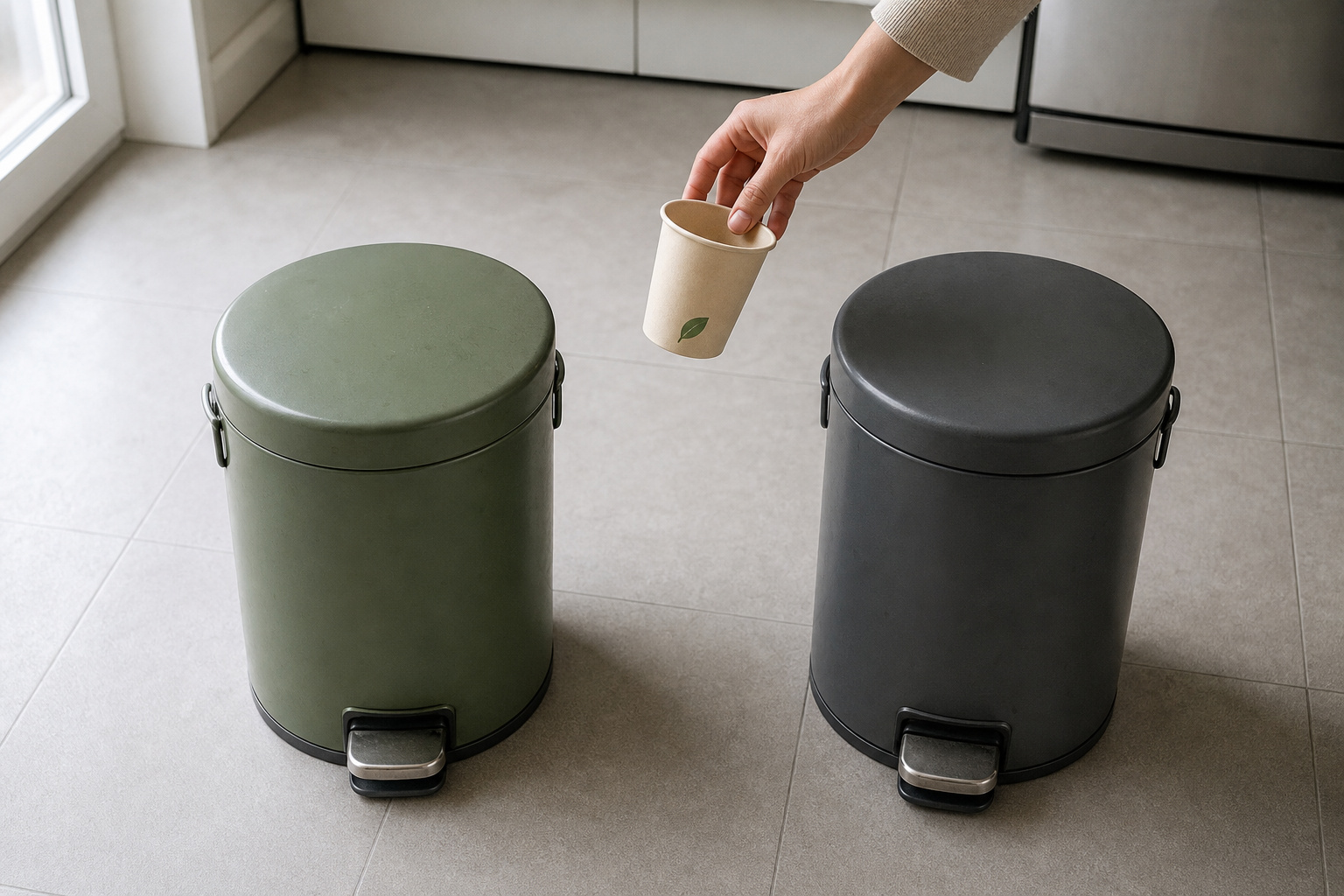
This is the most common misunderstanding, and consumers can hardly be blamed. The word "compostable" on the label never specifies "compostable where." The default scenario described by EN 13432 and ASTM D6400 is industrial composting, and the certificate is valid only in that scenario. Home composting is a separate certification with a separate logo and far stricter conditions—because a home compost pile can hardly sustain the temperatures of industrial composting over long periods. A material certified only for industrial composting, tossed into a backyard bin, may still be sitting there intact a year later—and the person who buried it will draw a very reasonable conclusion: this thing is a fraud.
It isn't fraud. It was simply certified for a place it never reached.
-
Where Compostable Packaging Actually Belongs
None of the above means compostable packaging is a gimmick. It is a tool with a narrow range of use—and within that range, it is nearly irreplaceable.
First, some packaging is destined to get dirty. Paper bowls covered in sauce, paper plates soaked with oil, coffee cups with milk residue—these are simply not cost-effective to recycle. Their compostable versions can enter the food-waste stream, which is where they belong.
Second, the collection loop is closed and controlled. Stadiums, music festivals, corporate cafeterias, chain brands with their own back-of-house waste contracts. When a single entity controls both the packaging and the bin, it can specify certified materials, contract an industrial composting facility, and verify that the material actually arrived. This is the only scenario in which compostable packaging performs exactly as advertised.
Third, regulation specifically requires it. Tea bags, coffee capsules, fruit-and-vegetable stickers—small, food-soiled, impossible to separate. Precisely for this reason, the EU specifically requires these categories to be compostable.
The pattern is clear: compostable works where the waste is already organic and someone already collects it; it fails where it is asked to solve a recycling problem that doesn't exist.
-
If You're the One Choosing Packaging: Four Questions
-
Does a waste stream for this product actually exist? Not "could exist"—exists today, with collection and a processing facility. If the answer is no, certified material gives you a logo and a liability.
-
Industrial or home composting? These are two separate certificates. Marketing "home compostable" in an urban market where most buyers have no yard is a claim waiting to blow up.
-
What exactly does the label say? Just the word "compostable" is enough to draw regulatory attention these days. State the certification name; state the applicable environment. If the honest description is "currently not accepted in food-waste collection," say so—vagueness is more dangerous than candor.
-
What happens with a recyclable alternative? If switching to compostable pulls volume out of a functioning recycling stream, or contaminates it, the net effect may be worse. Compare systems, not materials.
-
Frequently Asked Questions
Is compostable packaging always better than recyclable packaging?
Not necessarily—they solve different problems. Compostable handles items soiled with food that the recycling system cannot process; recyclable handles clean, single-material packaging for which most cities already have infrastructure. Beverage bottles: recyclable wins. Sauce-covered takeout containers: compostable wins.
Will a compostable cup decompose in a landfill?
Practically, no—and not on any timescale worth planning around. Landfills are designed to limit moisture, oxygen, and microbial activity. The cup might degrade slowly over decades, but that is not composting.
Wrapping Cucumbers in Plastic Film Is Not the Villain, but It Is Not Innocent Either
Related Article