Is less packaging always more environmentally friendly?
Over the past two years, the main regulatory theme has been "packaging reduction": limiting void space, limiting single-use packaging, limiting composite structures. But another track has been advancing at the same time—food waste. On 30 March 2026, International Day of Zero Waste, UNEP once again put the numbers on the table: 19% of food globally is wasted at the consumption stage, and another 13% is lost between harvest and reaching shelves. When these two tracks collide, one question cannot be avoided: if packaging is reduced to the extreme, will food loss instead rise?
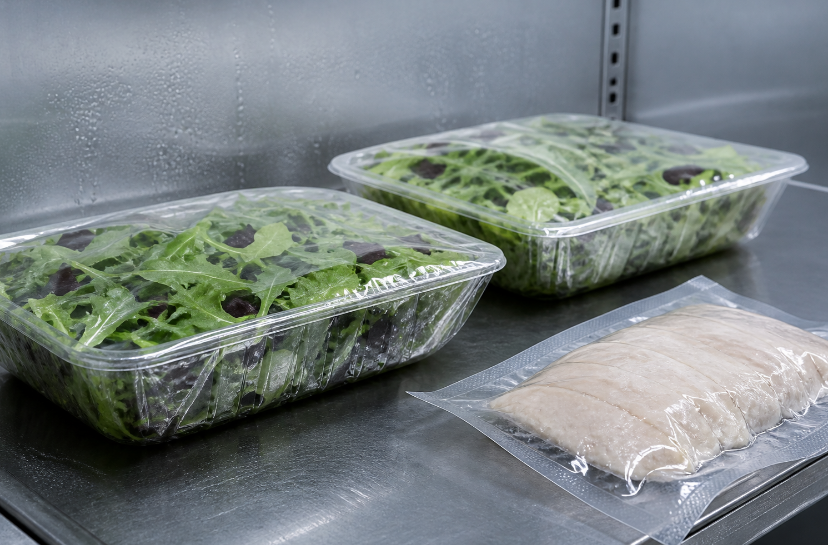
I. First, three numbers
1.05 billion tonnes—the amount of food wasted globally in 2022, about 19% of food available for consumption.
13%—the share lost before reaching shelves (harvest, storage and transport, processing).
8%–10%—the share of global greenhouse gas emissions corresponding to food loss and waste. This magnitude is higher than the total emissions of many countries.
Add one policy number: the EU's revised Waste Framework Directive took effect on 16 October 2025, requiring member states to reduce food waste by 10% in processing and manufacturing and by 30% per capita in retail and consumption by the end of 2030 (baseline 2021–2023). These are binding targets, not recommendations.
Why should the plastic packaging industry pay attention to these three sets of numbers? Because losses are concentrated at the retail and household ends, and these two ends offer limited room for action: adjusting order volumes, changing storage methods, and changing packaging. The first two are operational issues; the third is precisely the part suppliers can participate in.
II. Four things packaging does in the food chain
First, barrier. By keeping out oxygen, moisture, and light, oxidation and mold are slowed down. Data published by a materials company show that pre-packaged plastic packaging can extend the shelf life of beef from 3 days in butcher paper packaging to 21 days. But barrier performance is not "the thicker the better"; it must match the category: fresh products are sensitive to oxygen, dry goods to moisture, and baked goods to moisture reabsorption. If the direction is wrong, thickening will not help.
Second, portioning. Small-format packaging reduces "can't finish it after opening." As household sizes shrink, this has a more direct impact on waste rates than barrier performance.
Third, logistics. The role of plastic packaging here is pressure resistance, temperature resistance, and damage prevention. Losses in the transport stage often occur in segments you cannot see.
Fourth, information. Date labeling, storage conditions, and advice after opening. If information is unclear, even the best packaging cannot save the product. A typical scenario is mixing frozen and chilled storage: consumers cannot understand the icons and put the product on the wrong shelf at home—once this step goes wrong, all three previous layers of protection fail.
III. Three pairs of contradictions between reduction and preservation
Contradiction one: thinner vs. barrier. When film becomes thinner, barrier performance usually declines accordingly. What is saved is a few grams of plastic; what may be lost is an entire batch of goods.
Contradiction two: mono-material vs. high barrier. Recyclable design requires less use of composite materials, but high barrier performance is often achieved through multilayer structures. The solution is not to retreat to multilayer structures, but to use coating or thin EVOH layers with compatibilizer layers to build barrier performance into a mono-material system.
Contradiction three: recyclability vs. shelf life. This is the most argument-prone item. Procurement wants recyclability; the brand wants shelf life. Both are right.
There is also a hidden cost that is often overlooked: after film becomes thinner, machines run less smoothly, and both seal failure rates and downtime rise together. This loss does not appear in the packaging quotation; it first appears on the customer side in the form of complaints and returns—by the time you know about it, you have already paid twice.
There is really only one criterion for judgment: look at the carbon across the entire chain, not the gram weight of the packaging itself. Emissions from upstream cultivation, processing, and transport are all invalidated the moment food is thrown away, and that portion is usually many times the packaging's own emissions. Multiple life-cycle studies point to the same conclusion: in most food categories, packaging accounts for only a small part of the product carbon footprint.
IV. Four steps factories can take
Step one: change the accounting basis. Change "how many grams of carbon per package" to "how much packaging carbon per kilogram of food." Once the basis changes, many disputes disappear automatically.
Step two: measure before reducing. For any thinning plan, first conduct shelf-life and drop tests, then discuss quotations.
Step three: use thin layers to replace thick layers. Prioritize solving high-barrier requirements with coatings, thin EVOH layers plus compatibilizer layers, rather than stacking aluminum foil or nylon.
Step four: turn data into sales material. It is not that customers do not believe you; it is that no one has given them a test report they can hand to the brand owner.
Customers often ask: if packaging becomes thinner, will it spoil more easily? Yes—if you only reduce thickness without changing the structure. So the correct order is to change the structure first and then reduce thickness, with testing done separately for the two steps.
Customers often ask: do recyclability and preservation have to be an either-or choice? Not necessarily. Mono-material plus thin high-barrier layers have already been proven in many categories; the cost is a narrower process window and the need for supplier support in machine adjustment.
Customers often ask: will customers accept this accounting? What they accept is data, not claims. A test report stating shelf life, damage rate, and carbon emission comparisons is more useful than ten pages of PowerPoint slides.
Europe's Waste Plastics Export Ban
Core Transition Period of the Bisphenol A Ban Has Ended
Related Article