
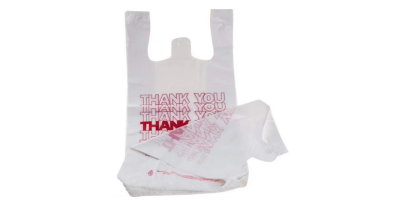
Eco-Friendly Mail Sacks Transform Global Logistics
2025-10-24
Eco-Friendly Mail Sacks Transform Global Logistics, Cutting Carbon Emissions by 35% October 24, 2025 - From busy sorting hubs in New York to remote delivery stations in rural India, a quiet revolution is unfolding in the global logistics sector: the widespread adoption of eco-friendly mail sacks is replacing traditional plastic alternatives, driving significant reductions in carbon footprints and waste, according to a new report by the International Postal Union (IPU).
For decades, the postal and courier industry relied on single-use plastic mail sacks, which are cheap to produce but take up to 450 years to decompose in landfills. A 2024 IPU study found that these sacks accounted for 18% of the industry’s total plastic waste—equivalent to 2.3 million metric tons annually. “We were facing a crisis,” said Maria Gonzalez, head of sustainability at the IPU. “Our members, from national postal services to private couriers like DHL and UPS, were under growing pressure from governments and consumers to reduce plastic reliance.”
The solution has come in the form of innovative, sustainable mail sacks made from a blend of recycled polyester and plant-based biopolymers. These sacks are not only fully biodegradable within 18 months but also 20% more durable than traditional plastic versions, with a lifespan that allows for up to 15 rounds of reuse before recycling. “We tested over 50 materials before settling on this blend,” explained Thomas Lee, chief technology officer at GreenPack, a leading manufacturer of eco-friendly packaging. “The key was balancing sustainability with functionality—these sacks can withstand rain, rough handling, and extreme temperatures, just like plastic, but without the environmental cost.”
Major logistics players have already embraced the shift. DHL, which operates in 220 countries, announced in September that it has replaced 90% of its plastic mail sacks with the eco-friendly alternative across Europe. The move has resulted in a 40-ton reduction in plastic waste per month and a 12% drop in packaging-related carbon emissions. “Our customers have responded positively too,” said Lisa Chen, DHL’s global sustainability director. “A recent survey found that 78% of consumers are more likely to choose a courier that uses sustainable packaging, which has helped boost our market share.”
Government policies have further accelerated the transition. The European Union’s “Green Logistics Directive,” implemented in January 2025, mandates that all postal and courier companies use 100% recyclable or biodegradable packaging by 2026. In the U.S., the Postal Service (USPS) has committed to phasing out single-use plastic sacks by 2027, with a $50 million investment in sustainable packaging research. Even in developing markets, progress is evident: India Post, one of the world’s largest postal networks, has rolled out eco-friendly sacks in 12 major cities, with plans to cover all 155,000 post offices by 2028.
The impact extends beyond waste reduction. The IPU’s new report projects that if global adoption of eco-friendly mail sacks reaches 80% by 2030, the industry could cut its annual carbon emissions by 35%—equivalent to taking 1.2 million cars off the road. “This is more than just a packaging change; it’s a step toward a more sustainable logistics ecosystem,” Gonzalez added. “As technology improves, we expect these sacks to become even more affordable, making sustainability accessible to small and medium-sized couriers too.”
Challenges remain, however. The initial cost of eco-friendly sacks is approximately 5% higher than plastic ones, which has deterred some smaller companies. To address this, the IPU has launched a $20 million grant program to help developing countries and small couriers transition. “Sustainability shouldn’t be a luxury,” Gonzalez said. “We need to ensure that every player in the industry can participate in this shift.”
As the world marks International E-Waste Day this week, the rise of eco-friendly mail sacks serves as a reminder of how small changes in packaging can drive large-scale environmental impact. For now, as millions of these sacks crisscross the globe carrying letters, parcels, and essential goods, the logistics industry is proving that sustainability and efficiency can go hand in hand.
Drawstring Trash Bags
Food packaging bags
Related Article
Plastic packaging printing involves design, plate making, ink, printing, lamination, and quality control. Common methods include gravure, flexographic, and digital printing. Gravure suits large orders with vivid, consistent colors; flexographic works for simple designs; digital fits small batches. Confirming material, size, colors, and bag type before production ensures satisfactory custom packaging.
A Detailed Explanation of Plastic Packaging Bag Printing Processes
Heat-seal bags are flexible plastic packaging sealed by heat and pressure, offering strong airtight, moisture-proof, and dust-proof protection. Available in PE, CPP, PET/PE, nylon, and biodegradable materials, they suit food, hardware, electronics, chemicals, and export packaging. Cost-effective, automation-friendly, and widely customizable, they are one of the most versatile packaging solutions.
What are heat-seal bags?
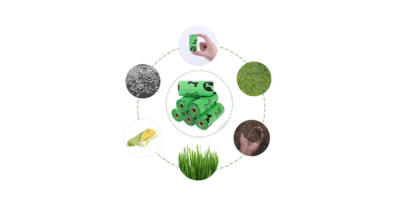
Regular plastic bags and biodegradable bags should not be mixed for recycling. They use different materials and processing methods, so mixing them can harm sorting and recycled material quality. Consumers should follow local waste sorting rules, while businesses should confirm material types and certifications before choosing packaging.
Can regular plastic bags and biodegradable bags be recycled together?
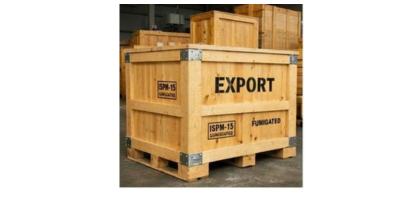
As September and October mark a key procurement window, overseas buyers prepare for fourth-quarter sales and holiday demand. When sourcing plastic packaging, companies should plan early, verify supplier capacity, quality, and delivery times, and confirm materials, sizes, printing, and quantities in advance.
The peak season for foreign trade procurement has arrived. How should companies choose suppliers?