Drawstring Trash Bag
Drawstring Trash Bags Surge in Global Popularity, Blending Convenience and Sustainability
Recent years have witnessed a remarkable shift in household waste management, with drawstring trash bags emerging as a dominant choice among consumers worldwide. Driven by a desire for mess-free handling and eco-conscious solutions, this product category has seen unprecedented growth, reshaping the $5.3 billion global trash bag market, according to 2024 data from Grand View Research. Once considered a niche or premium option, drawstring bags are now standard in millions of homes, from compact urban apartments to large suburban houses.
Unlike traditional flat trash bags that require cumbersome knotting and often leak when lifted, drawstring models feature integrated cords that enable one-handed sealing and carrying. This design innovation addresses several long-standing frustrations: no more tying wet, slippery knots; no more accidental spills when carrying heavy loads; and no more trash juice dripping down your leg while walking to the outdoor bin. A Statista consumer survey conducted in Q3 2024 found that 82% of respondents cited "easy sealing and leak resistance" as their top reason for switching to drawstrings, with 67% noting reduced odor leakage—a critical benefit for small apartments and urban homes where trash often accumulates indoors between trips to the dumpster. "I used to dread taking out the trash because of spills," said Maria Lopez, a Toronto-based homeowner. "The drawstring keeps everything locked in, and I no longer have to fumble with knots after handling wet kitchen waste. It sounds small, but it has genuinely changed my daily routine."
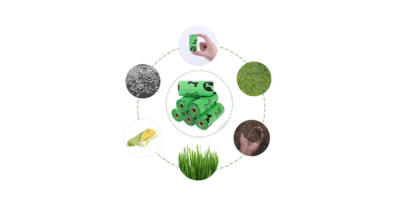
Sustainability has further fueled the trend, turning a convenience product into an environmentally responsible choice. Major brands like Glad and Hefty have launched eco-friendly lines, with some models made from 30–50% plant-based polymers such as corn starch, potato starch, or sugarcane derivatives. These bio-based materials decompose in industrial composting facilities within 180 days, compared to the 400+ years required for conventional plastic bags. The Sustainable Packaging Coalition reports that such biodegradable drawstring options saw a 48% year-on-year sales increase in 2024, as 71% of European and North American consumers now prioritize environmentally friendly household products. Even mid-tier regional brands are entering the market, offering drawstring trash bags certified by the Biodegradable Products Institute (BPI) or TÜV Austria.
Market growth shows no signs of slowing. Global sales of drawstring trash bags hit $2.4 billion in 2024, a 38% jump from 2023, with Asia-Pacific leading the surge. China recorded 52% growth, driven by rapid urbanization and stricter waste sorting regulations, while Japan saw 41% growth as aging households seek easier-to-use products. South Korea and Australia are also posting double-digit increases. Industry analysts predict this momentum will continue as brands add innovations like antibacterial coatings—ideal for healthcare and food service settings—and customizable sizes for commercial use in restaurants, hotels, and offices. Some premium models now feature "odor-lock" multi-layer films and reinforced drawstrings rated to hold up to 55 pounds.
"The drawstring design solves longstanding consumer pain points while aligning seamlessly with global sustainability goals," said Elena Martinez, a home goods industry expert at Euromonitor International. "As households and businesses alike prioritize efficiency and eco-responsibility, these bags are set to become the new standard in waste management—not just a trend, but a lasting shift in how we think about a product most people used to ignore." With continued material science breakthroughs and supportive packaging regulations worldwide, the drawstring trash bag appears poised to eventually replace flat bags entirely, one cinched closure at a time.
black small dog poop bag
Roll-up vest bag
Related Article